

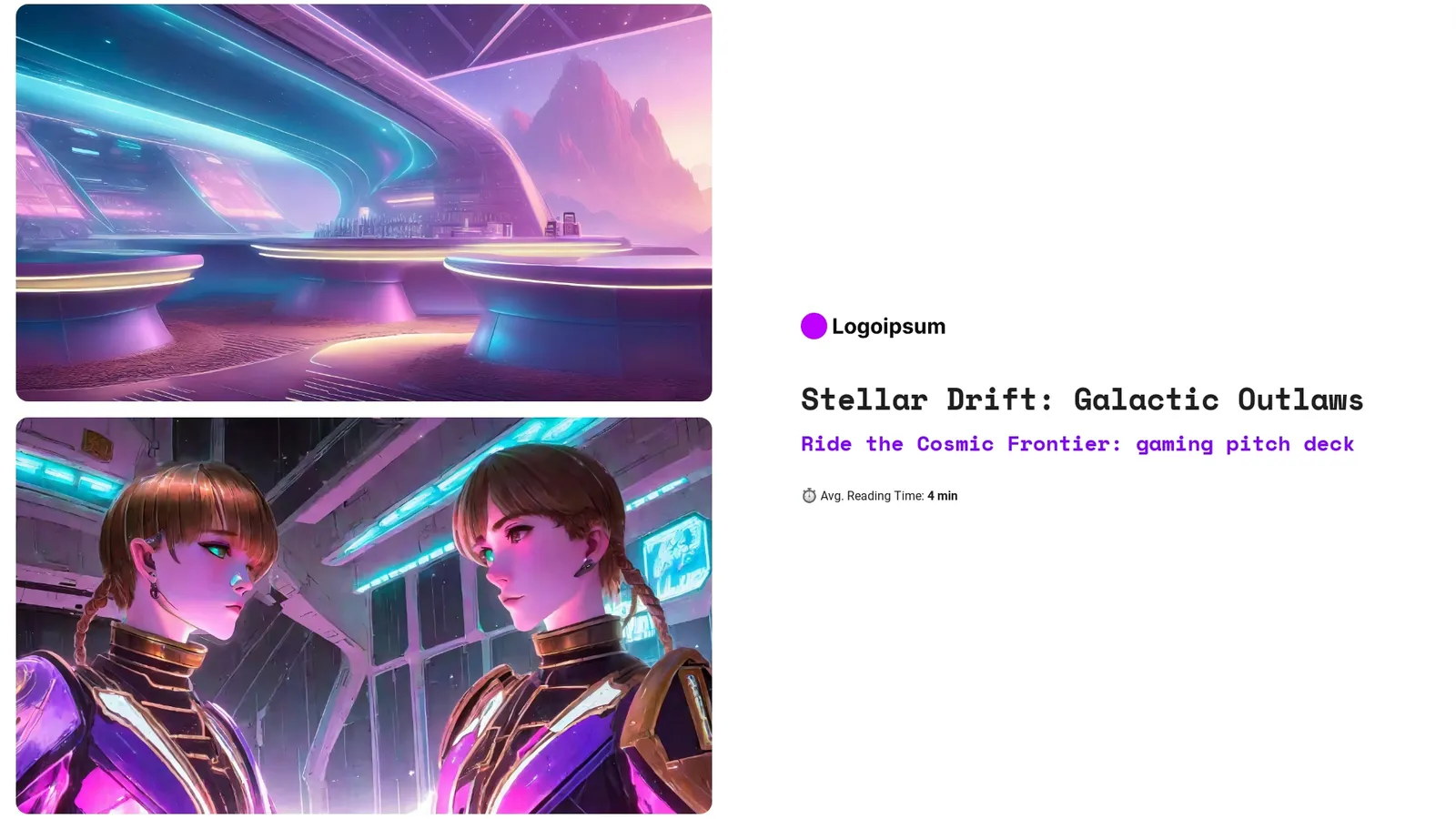




18 Winning Game Pitch Deck Examples to Follow (+Templates)
Learn how to make a game pitch deck that impresses publishers. Get real-world video game pitch deck examples, tips, and killer templates.
Set as Preferred Source
Only a handful of games get funded. Will yours be one of them?
If you don’t already know this, here’s the unforgiving truth – breaking into the game development world is tough.
For every 1000 games out there, only a handful make enough money to cover their cost, and only 1 or 2 go on to become big hits with sequels.
This reality makes game studios and publishers extremely cautious. They prefer investing in sequels of games that already did well, rather than taking a chance on something new.
This makes the task of raising money for your game development unenviably hard.
But I am not here to tell you to give up. I’m here to guide you through making a game pitch deck that has a fighting chance.
By the end you’ll know what you need to do, but also get ready-to-use templates that will make publishers sit up and take notice.
Let’s get started!
What does a successful game pitch deck look like?
A successful game pitch deck goes beyond static slides; it’s an interactive experience.
Imagine a deck where each click reveals a new aspect of your game’s world, engaging the audience more deeply.
Interactive decks allow you to showcase gameplay videos, clickable demos, and even mini-games, making your presentation not just informative but memorable.
This dynamic approach helps your game stand out, as it not only tells but shows the potential of your idea. It’s about creating a journey for the viewer, one where they can almost feel the game come to life.
Here’s an example of a successful game pitch deck:
What to include in a game pitch deck?
Creating a game pitch deck is like weaving a compelling tale where each slide draws your audience deeper into the world you’ve created.
It’s not just about showcasing your game; it’s about making your audience believe in it as much as you do. Here’s how to structure your game pitch deck to tell that story effectively.
15 key slides of a game pitch deck:
- Title slide: Grab attention with your game’s name, logo, and an eye-catching image.
- Introduction slide: Introduce yourself and your team, emphasizing your passion and experience in gaming.
- Game concept: Describe your game’s concept in an engaging way. What makes it unique?
- Gameplay mechanics: Explain how your game is played. Include key mechanics and user experience.
- Story and characters: If your game is story-driven, bring its narrative and characters to life here.
- Art and design: Showcase the visual style and design elements of your game.
- Target audience: Define who your game is for and why they’ll love it.
- Market analysis: Present your research on market trends and your game’s place within it.
- Marketing and sales strategy: Outline your approach to getting your game into players’ hands.
- Development timeline: Offer a clear timeline for your game’s development process.
- Budget and financials: Be transparent about your financial needs and projections.
- Competitive analysis: Compare your game to others, highlighting your competitive edge.
- Technical details: If relevant, include technical aspects like platforms and system requirements.
- Demo or prototype: If available, showcase a demo or prototype of your game.
- Next steps slide: Conclude with what you need (funding, partnerships) and your immediate next actions.
Game pitch deck examples that captivate publishers
A game pitch deck is more than a collection of slides. It’s a storytelling tool that can make or break your game’s future.
They weave together the essence of the game, the passion of the creators, and the potential for success in a way that resonates with publishers and investors.
Let’s look at some examples of game pitch decks that have achieved this.
Note: If you’re fundraising for gaming software then you may want to look into our startup pitch deck examples.
Baldur’s Gate 3 game pitch deck (2023)
The Baldur’s Gate 3 pitch deck (reimagined by Storydoc’s design team) skillfully introduces the eagerly awaited RPG by Larian Studios.
It blends imaginative storytelling with insightful details, capturing the essence of an epic adventure set in the rich universe of the Forgotten Realms.
Scroll to preview
What makes this game pitch deck great:
- Engaging overview: The deck offers an enticing look into the game’s immersive narrative and deep character arcs.
- Rich character interactions: It showcases a variety of characters with meaningful, player-driven relationships.
- Solid market research and budgeting: It includes detailed market analysis and a well-planned budget for a polished gaming experience.
Indie game pitch deck (interactive template)
This indie game pitch deck example was created by our design team to showcase a fictional fantasy adventure game. It’s designed as a template to help developers present their ideas in a clear, engaging way.
The deck does a brilliant job of showing how to pitch a game – from the story and gameplay to the market opportunity and monetization plan.
Structured like a journey through the game’s world, it gives potential investors and partners a real sense of the experience – from big-picture concepts down to technical and commercial details.

Scroll to preview
What makes this game pitch deck great:
- Immersive storytelling: The deck kicks off with a vivid introduction to the game world, setting the stage for an emotional and engaging adventure narrative.
- Clear game overview: It outlines the gameplay mechanics, customization features, and unique elements like a dynamic weather system and branching story paths that boost replay value.
- Targeted market insights: It includes a well-structured market analysis that shows an understanding of genre trends, player demographics, and the game’s potential audience segments.
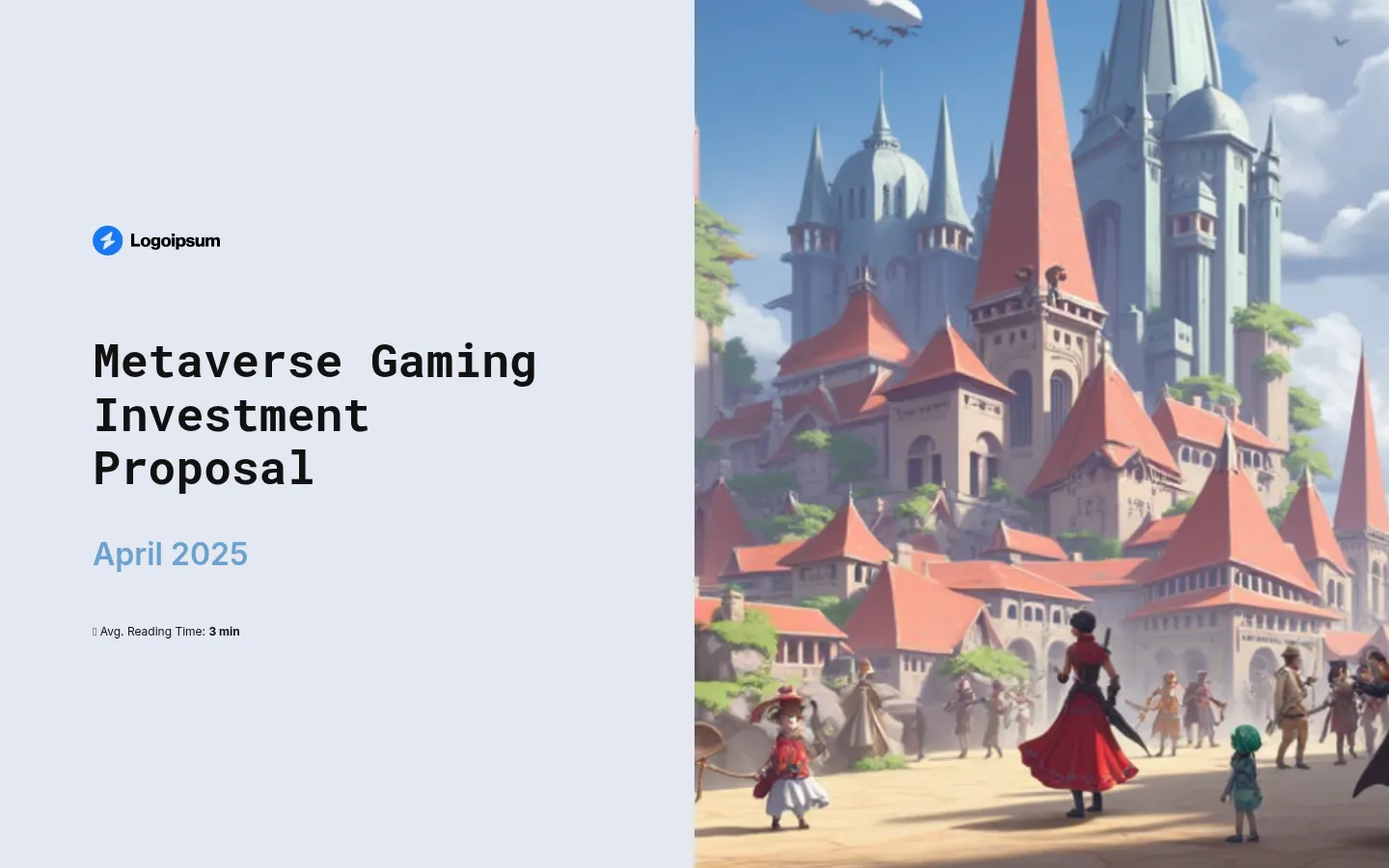
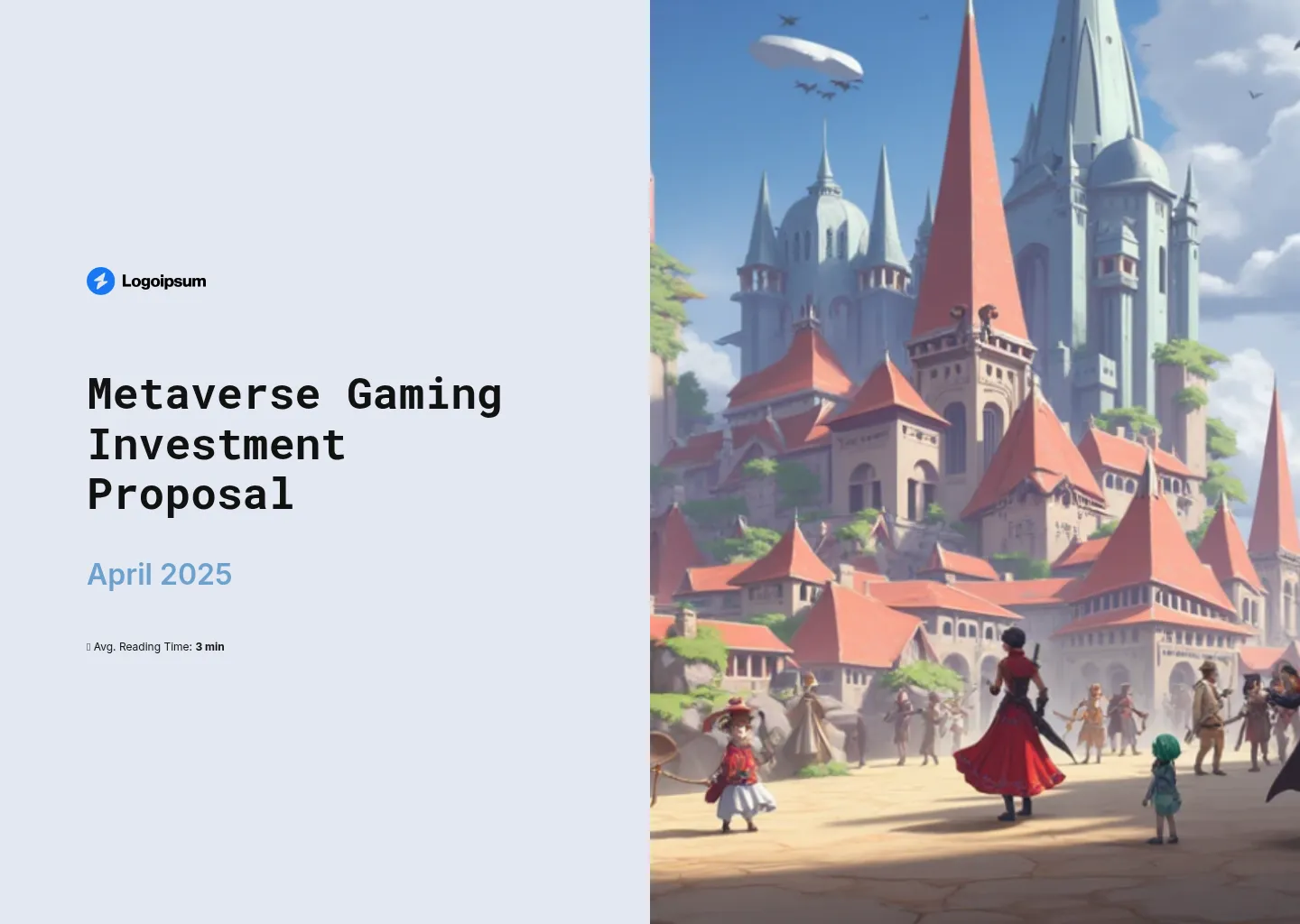
Metaverse gaming pitch deck (interactive template)
This metaverse gaming pitch deck was created as a fictional example of what a standout investment proposal could look like in the gaming space.
It introduces a rich virtual world where players build, explore, and connect – while showing how to pitch a metaverse game not just as a product, but as a dynamic, evolving platform.
The deck guides viewers through the game’s concept, features, and strategy with a smooth narrative flow, combining storytelling with interactivity to keep attention from start to finish.
Scroll to preview
What makes this game pitch deck great:
- Narrator slide: As viewers scroll, a narrator slide ties everything together, explaining key concepts in a clear, engaging way.
- Thought-out monetization strategy: From in-game purchases to subscriptions and ad integrations, the revenue model is laid out with clarity and confidence.
- Interactive budget breakdown: The budget section uses an interactive data visualization to show exactly how funds will be allocated – making the numbers easy to follow and trust.
Dark mode gaming pitch deck (interactive template)
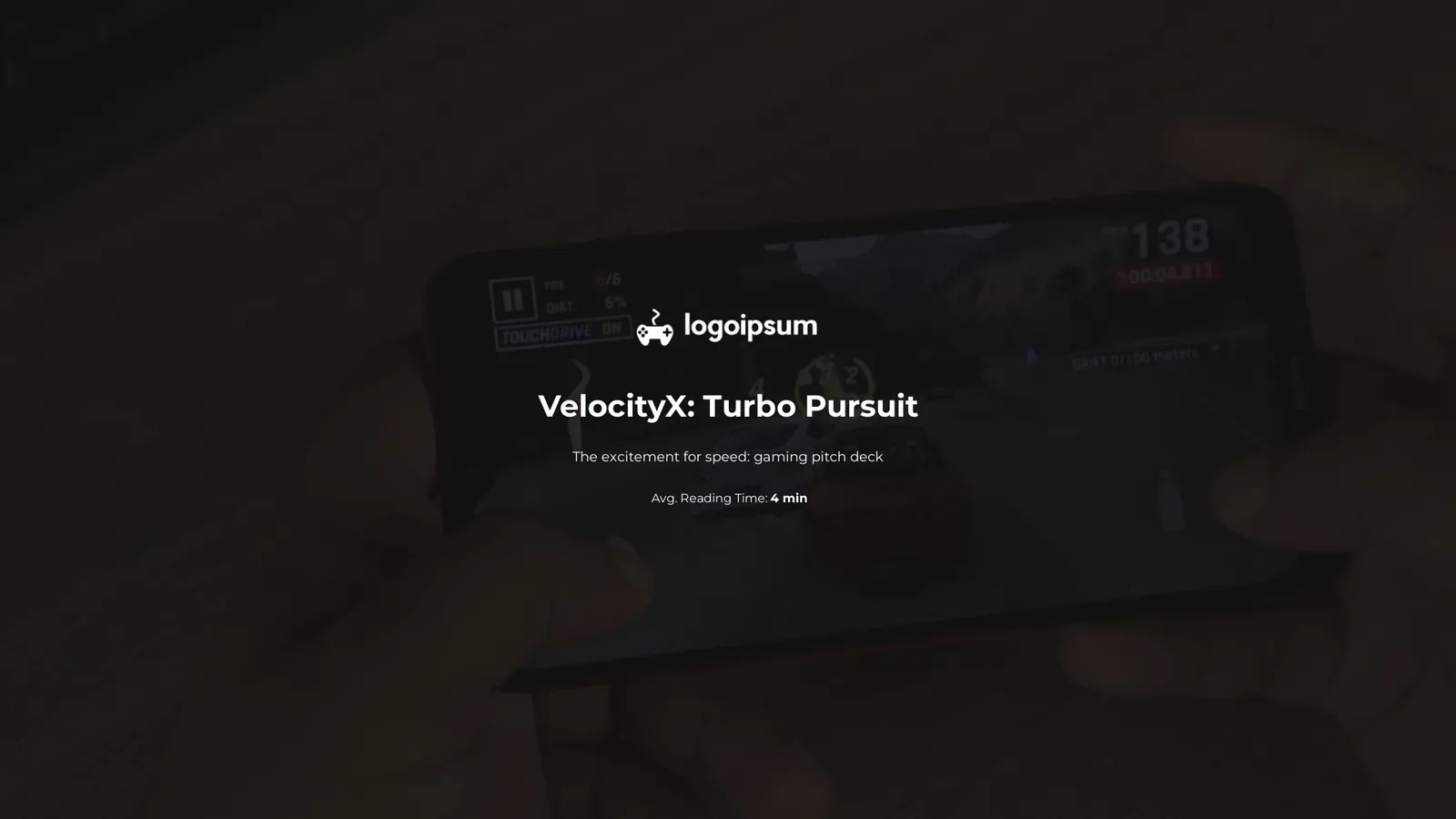
This pitch deck example usable as template uses dark mode design to offer a unique twist on the traditional presentation style.
By embracing a dark-themed aesthetic, it aligns perfectly with the game’s adrenaline-fueled, nocturnal street racing vibe.
This version of the deck not only maintains the compelling content of the original but enhances it through a visual style that resonates with the game’s essence.
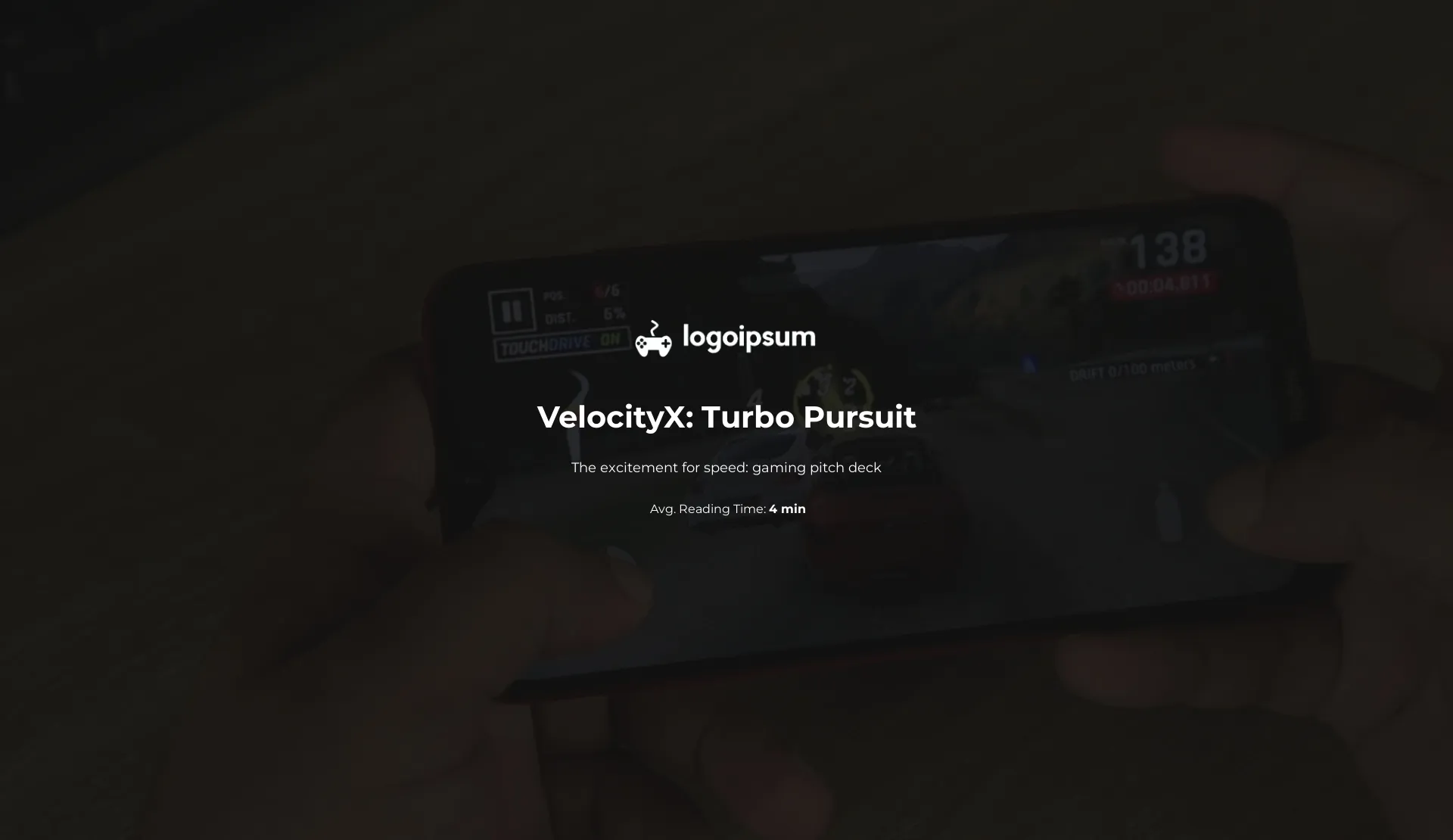
Scroll to preview
What makes this game pitch deck great:
- Modern and sleek design: The dark theme gives the deck a modern, sleek look that appeals to contemporary gaming aesthetics.
- Highlighting key elements: Strategic use of color highlights critical elements of the pitch, such as key features and unique selling points.
- Consistent branding: The dark mode reinforces the game’s brand identity, making the pitch deck an extension of the game’s overall experience.
Mobile game monetization pitch deck (interactive template)
This gaming pitch deck example usable as template is made for independent game developers to showcase their game concept, design, and potential to publishers or investors.
It adopts a traditional and brighter visual approach. This version is tailored to suit environments and preferences where a classic, more conventional aesthetic enhances the presentation’s effectiveness and clarity.
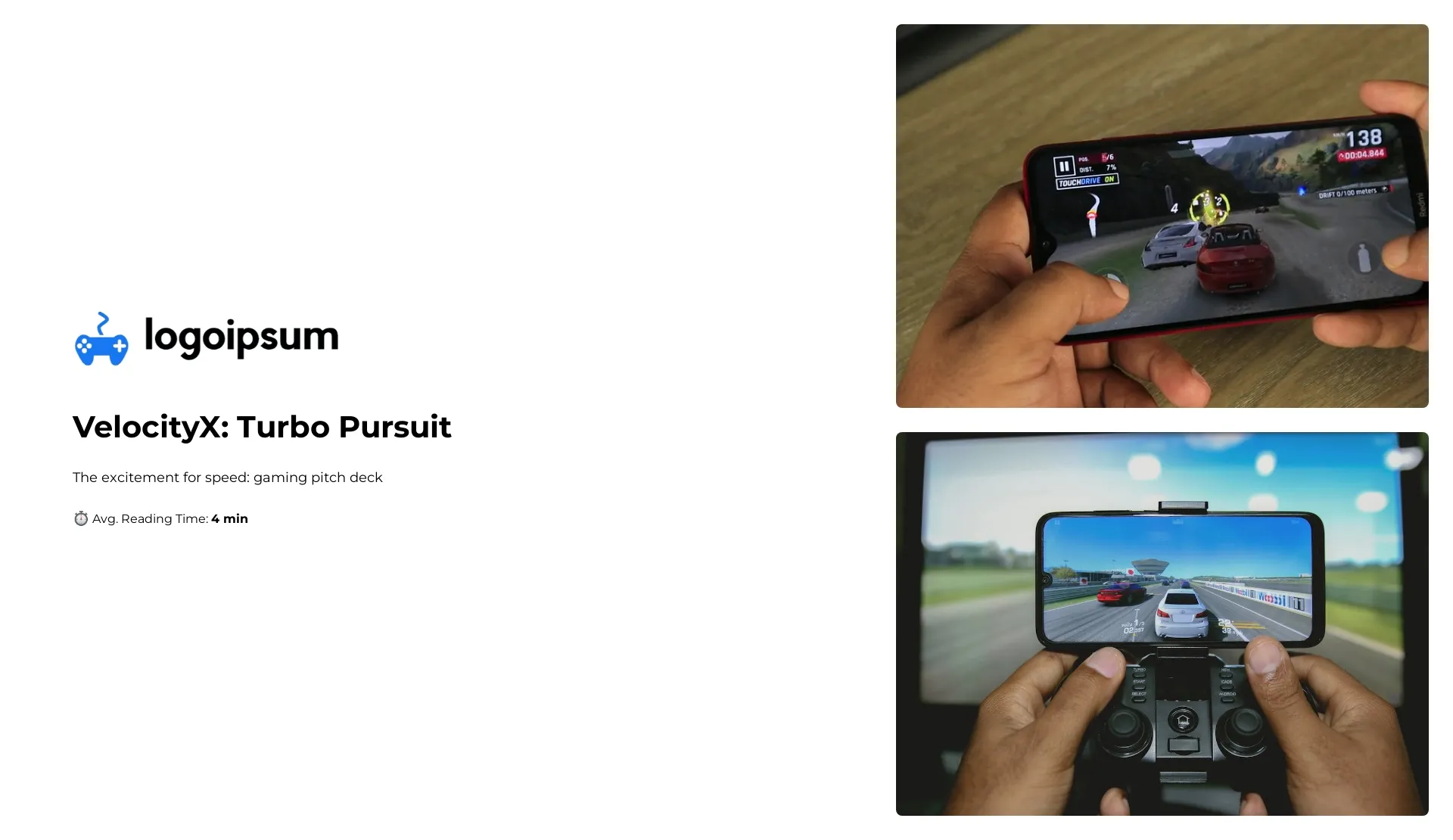
Scroll to preview
What makes this game pitch deck great:
- Clear development timeline: It outlines a well-defined development timeline with a dedicated timeline slide for milestones.
- Segmented content in tabs: The deck features information organized in tabs, enhancing user navigation and topic focus.
- Expandable section for game overview: It features an expandable ‘Read more’ section, allowing a deeper exploration of game details.
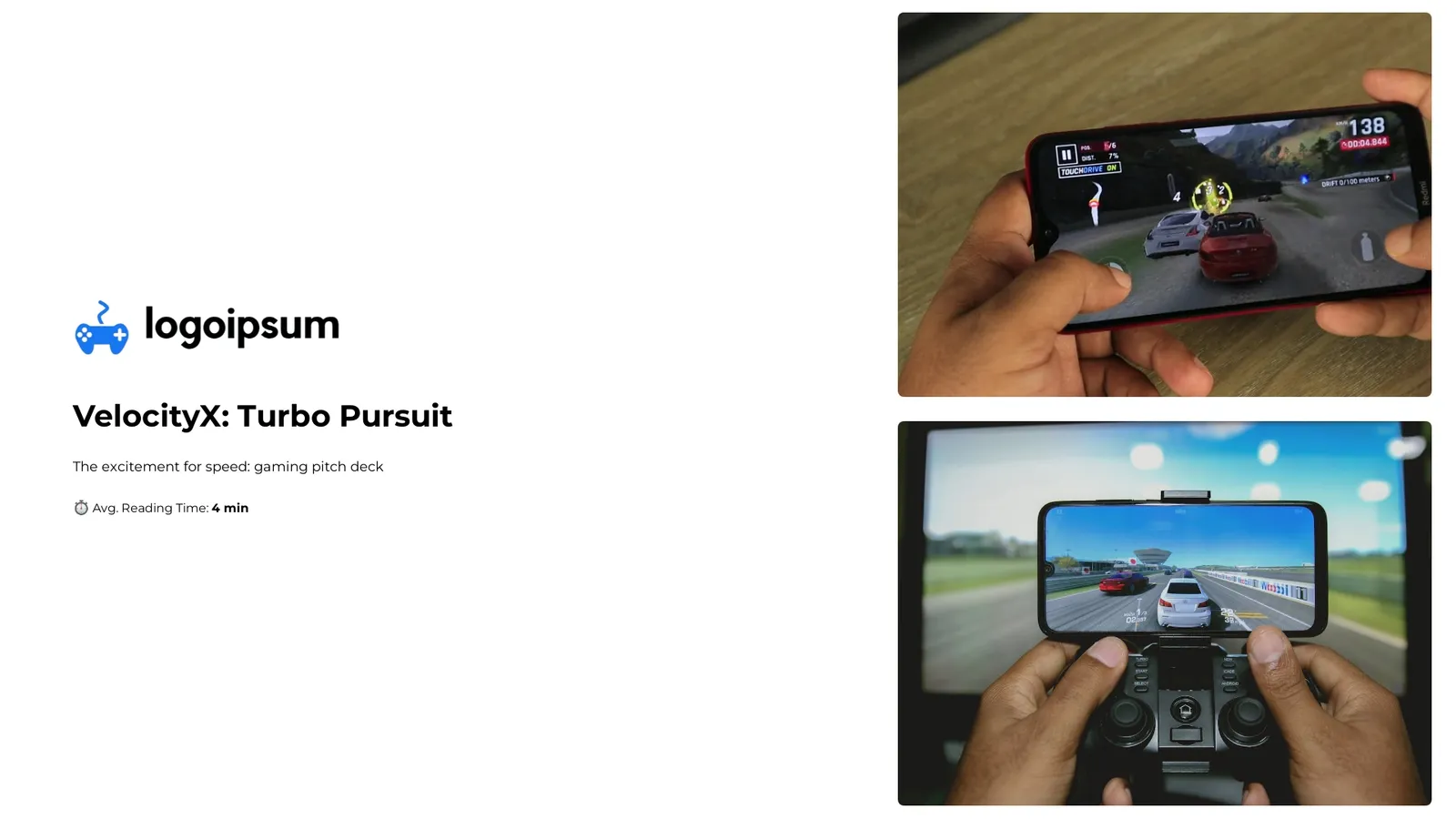
Video game pitch deck (interactive template)
This video game pitch deck was created as a fictional example by our design team to show how a post-apocalyptic action game can be pitched with clarity and style.
It blends striking visuals with detailed, well-structured content – capturing the core of a rich, narrative-driven game with time-bending mechanics and strategic combat.
The result is a deck that walks the line between cinematic presentation and practical business case.
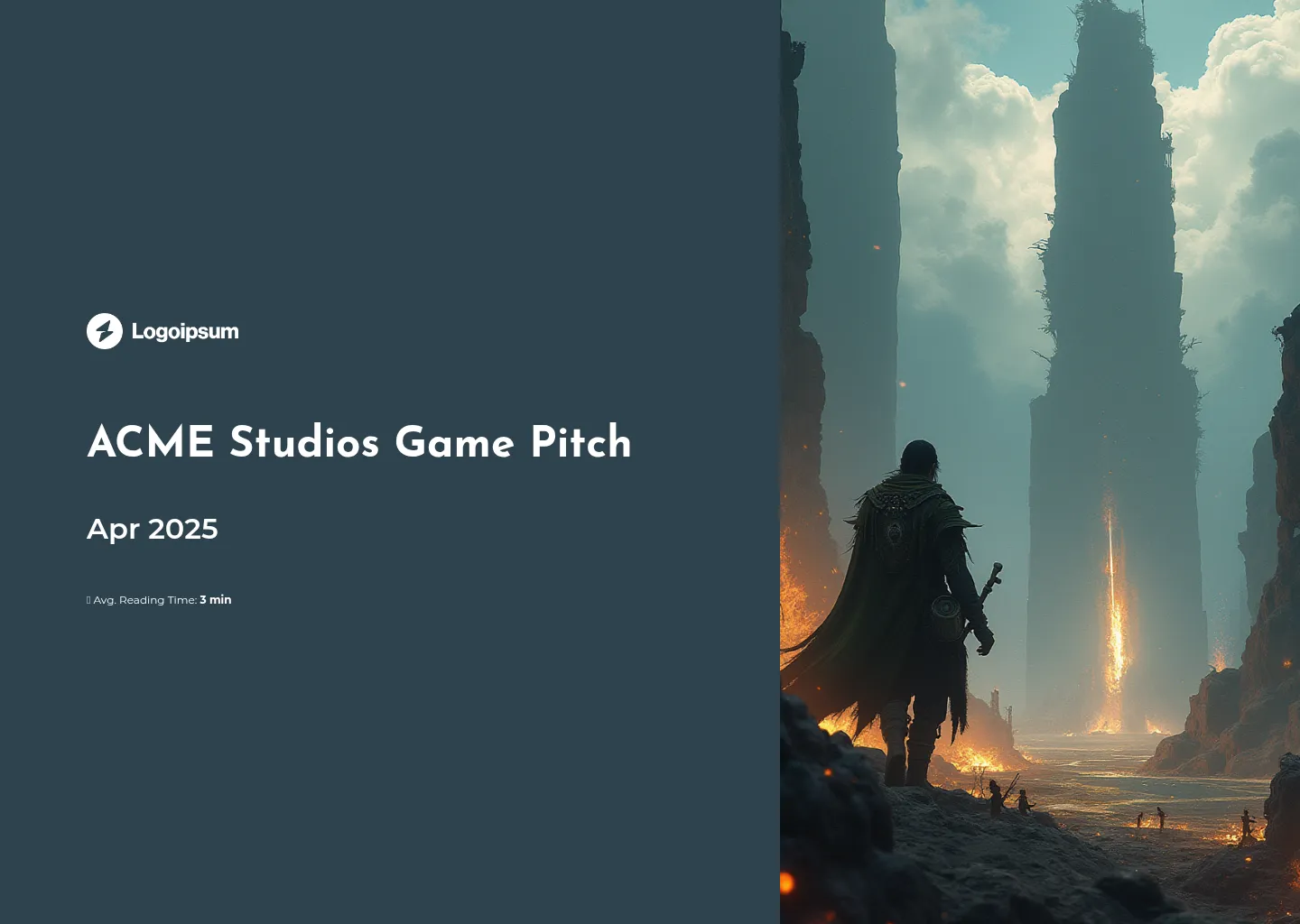
Scroll to preview
What makes this game pitch deck great:
- Clever use of multimedia: Visuals showcase combat, exploration, and interactive environments – bringing the concept to life.
- Solid marketing and exposure plan: It outlines a thoughtful go-to-market strategy including influencer partnerships, digital campaigns, and community engagement.
- Easy contact options: The deck ends with social media icons and direct links for quick outreach and ongoing updates.
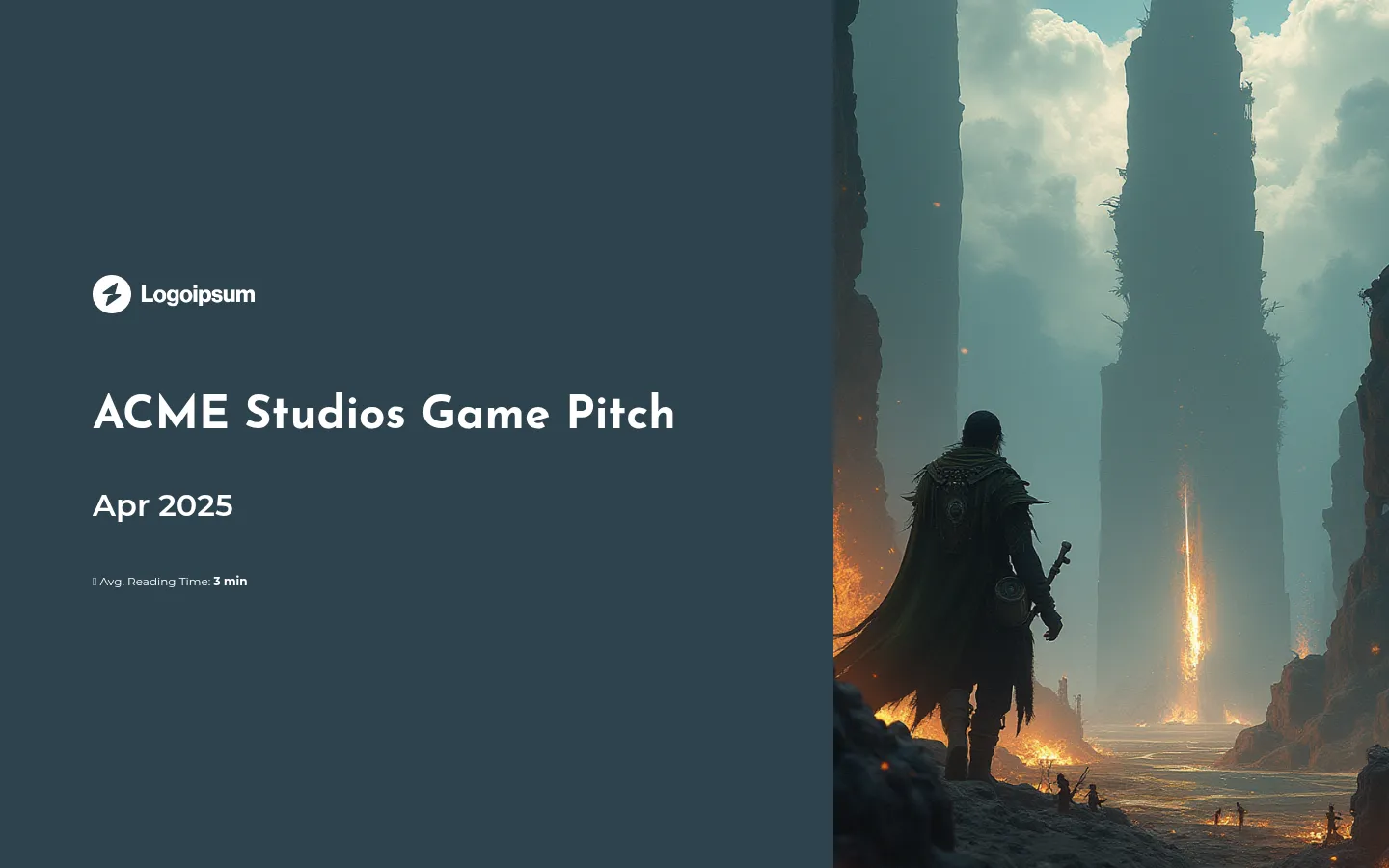
Gaming pitch deck for investors (template)
This game pitch deck was designed to appeal directly to investors, with a clear focus on business potential, smart monetization, and a compelling vision for growth.
Built around a strong value proposition, the deck highlights how ACME Game Studios is tackling key market challenges while delivering a gaming experience that keeps players engaged and coming back for more.
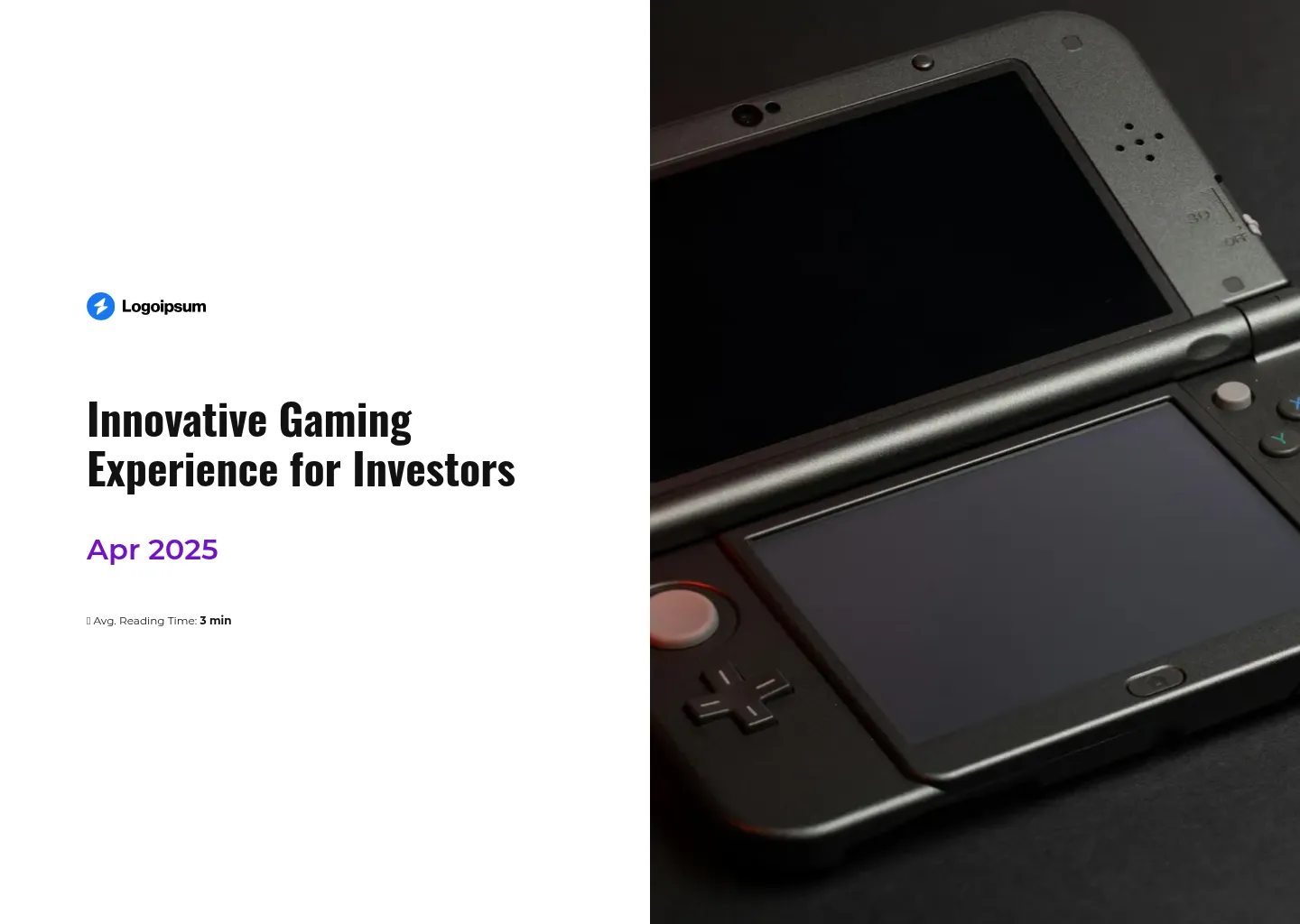
Scroll to preview
What makes this game pitch deck great:
- Real financial insights: It includes clear projections and key performance metrics – crucial for investors assessing growth and ROI potential.
- Video embedding for deeper impact: The deck supports embedded videos, giving investors a dynamic, first-hand look at gameplay and user engagement in action.
- Direct response to market challenges: It outlines exactly how the game addresses common industry issues like player retention, monetization friction, and standing out in a saturated market.
Button City 2020 game pitch deck (static PDF)
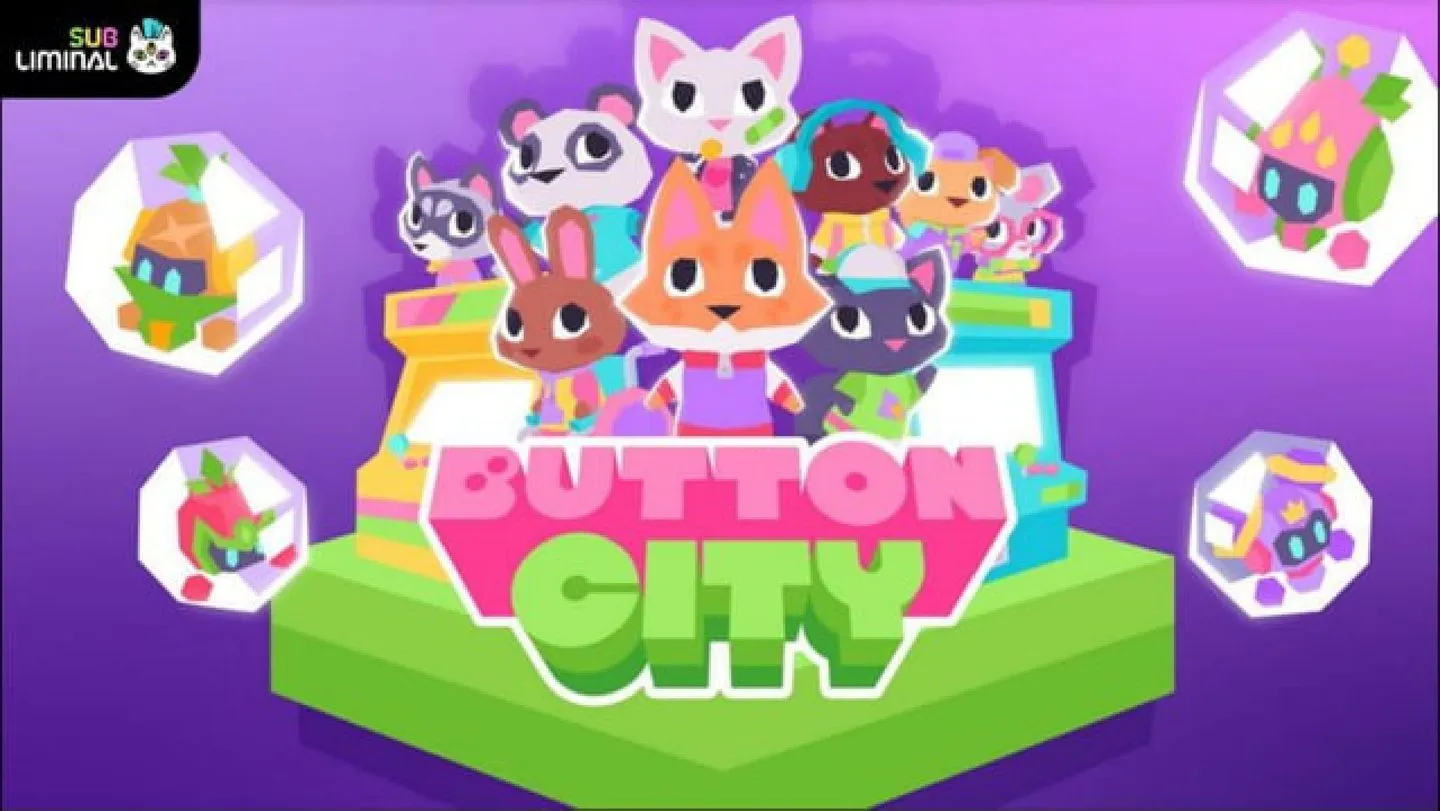
Button City is a narrative adventure game developed by Subliminal Gaming, featuring a community of low-poly animals named after herbs and spices.
The game was released on various platforms including PS5, Xbox Series X|S, Nintendo Switch, and Steam.
This pitch deck was used by the indie studio, in collaboration with WINGS Interactive, to secure additional funding in 2020 after the game had already secured pre-production funding in 2018.
Scroll to preview
What makes this game pitch deck great:
- Analysis of trends and projections: The deck includes an analysis of current market trends and future projections relevant to the game’s success.
- Perfect fit for publisher: It contains slides explaining why Button City is an ideal match for the publisher’s portfolio.
- Clear budget breakdown: It presents a detailed breakdown of the budget, outlining how funds will be allocated.
HyperDot game pitch deck (static PDF)
HyperDot’s pitch deck is an exemplary showcase of a minimalist, action-packed game, strategically designed to highlight the game’s unique features and accessibility.

Scroll to preview
What makes this game pitch deck great:
- Team and development insights: The deck provides an overview of the development team, showcasing the skills and expertise behind the game. This inclusion helps to build trust and credibility with potential investors or partners.
- Design aesthetics: It employs a minimalist design that mirrors the game’s own style, effectively conveying its sleek and modern feel.
- Inclusivity and accessibility: There’s a strong emphasis on the game’s accessibility features, showcasing the developers’ commitment to reaching a diverse audience.
Wayward Strand game pitch deck (static PDF)
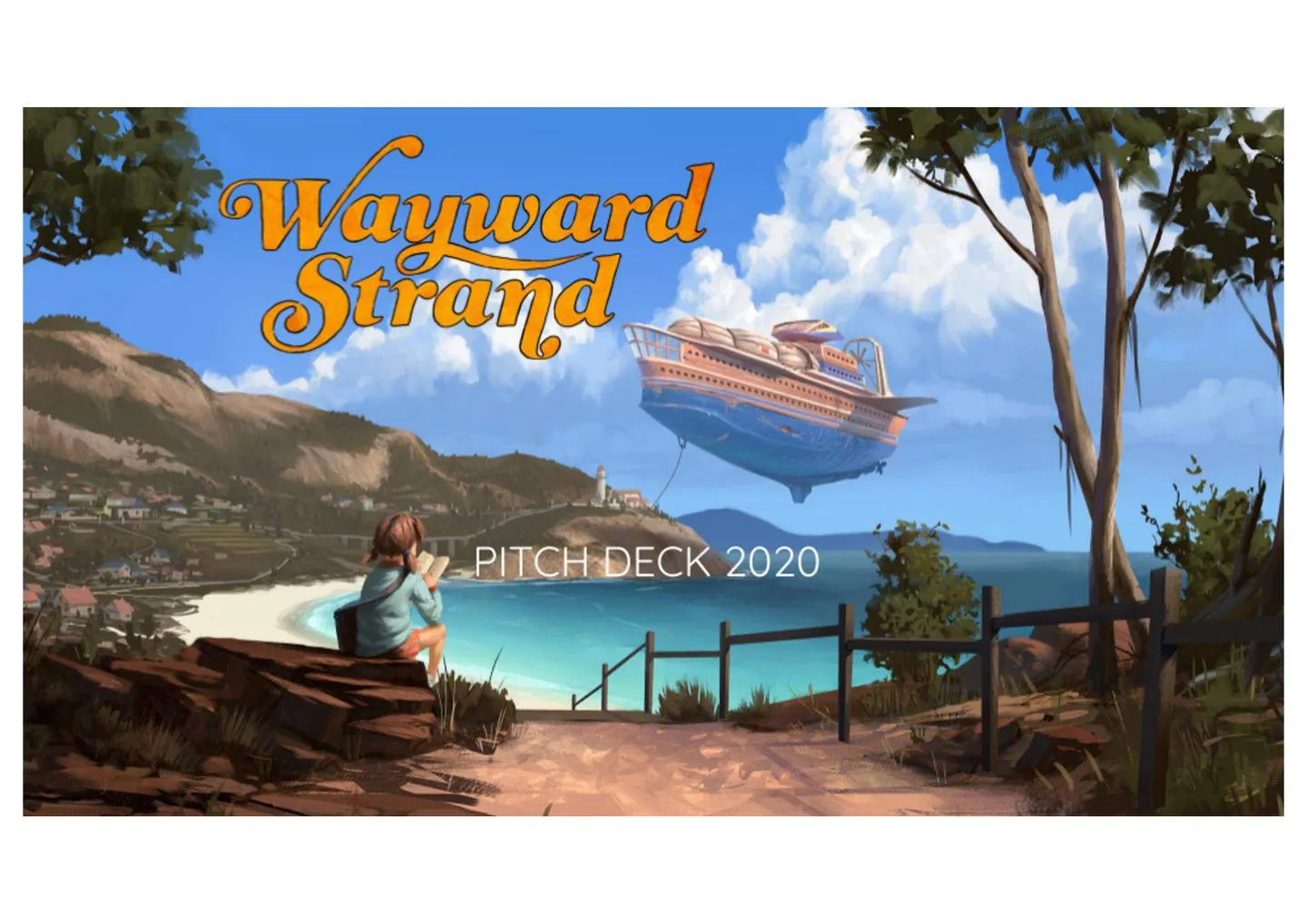
The Wayward Strand pitch deck beautifully introduces a narrative-driven game with a unique setting. It’s tailored to convey the depth of the story and the innovative gameplay mechanics.
Scroll to preview
What makes this game pitch deck great:
- Intriguing setting presentation: The deck successfully captures the curiosity of its audience with its unique airborne hospital setting.
- Storytelling focus: It highlights the game’s strong narrative element, showcasing the emotional depth and character development.
- Engagement strategy: The presentation is structured to showcase how player choices affect the storyline, emphasizing the interactive aspect of the game.
Bioshock game pitch deck (static PDF)
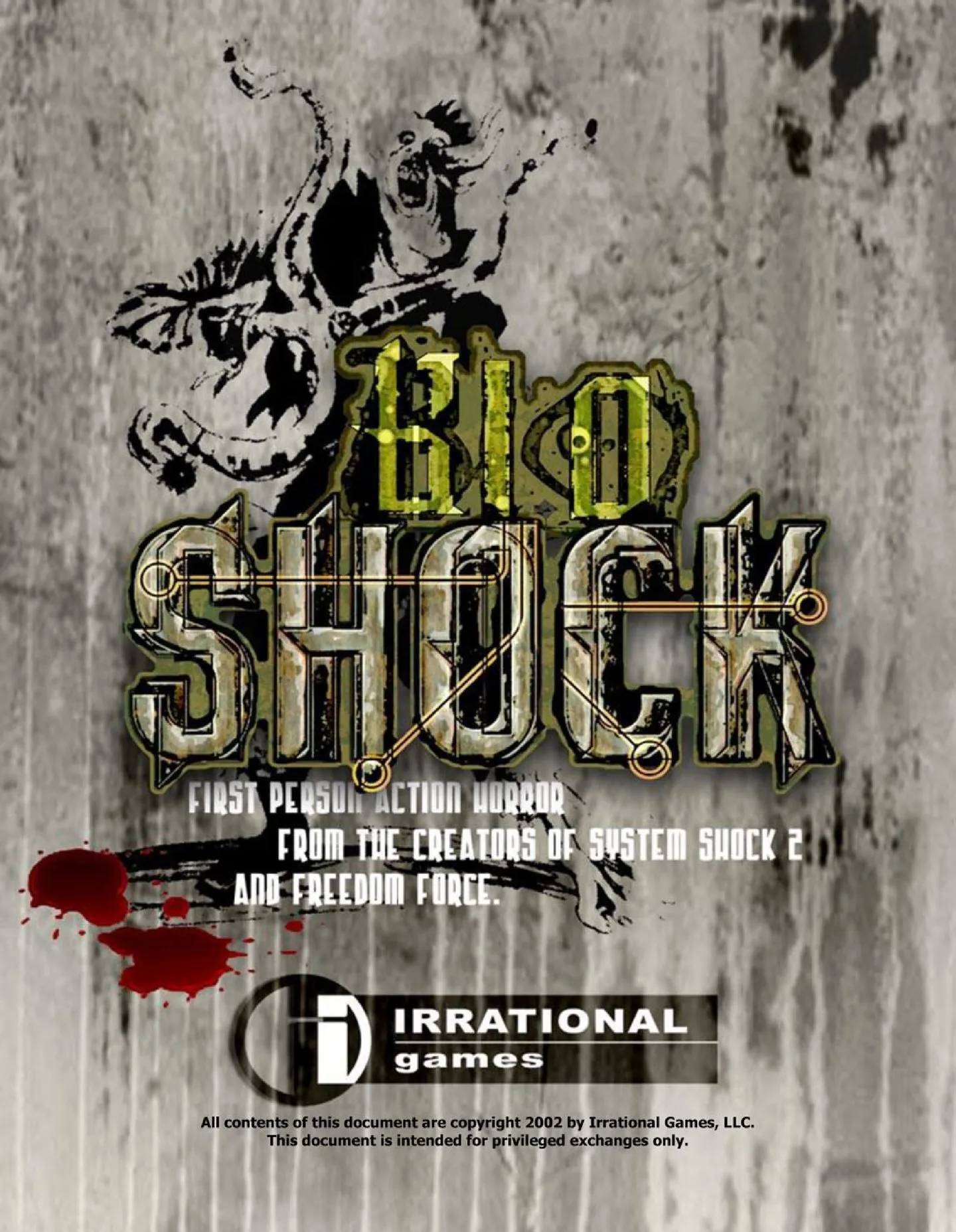
The BioShock pitch deck played a pivotal role in securing a publishing deal for the game in 2002. BioShock, developed by Irrational Games and later published by 2K Games, is a first-person shooter set in the dystopian underwater city of Rapture.
The game’s concept, developed by Ken Levine, draws inspiration from various twentieth-century dystopian and utopian thinkers.
Scroll to preview
What makes this game pitch deck great:
- Engaging storytelling: The deck effectively conveys the intriguing story of Bioshock, set in the dystopian underwater city of Rapture.
- Creative vision: It highlights Ken Levine’s creative direction, showcasing the game’s unique blend of ideas from thinkers like Ayn Rand, George Orwell, and Aldous Huxley.
- Comprehensive game overview: It provides an in-depth look at the game’s unique setting, themes, and gameplay mechanics.
Backbone game pitch deck (static PDF)
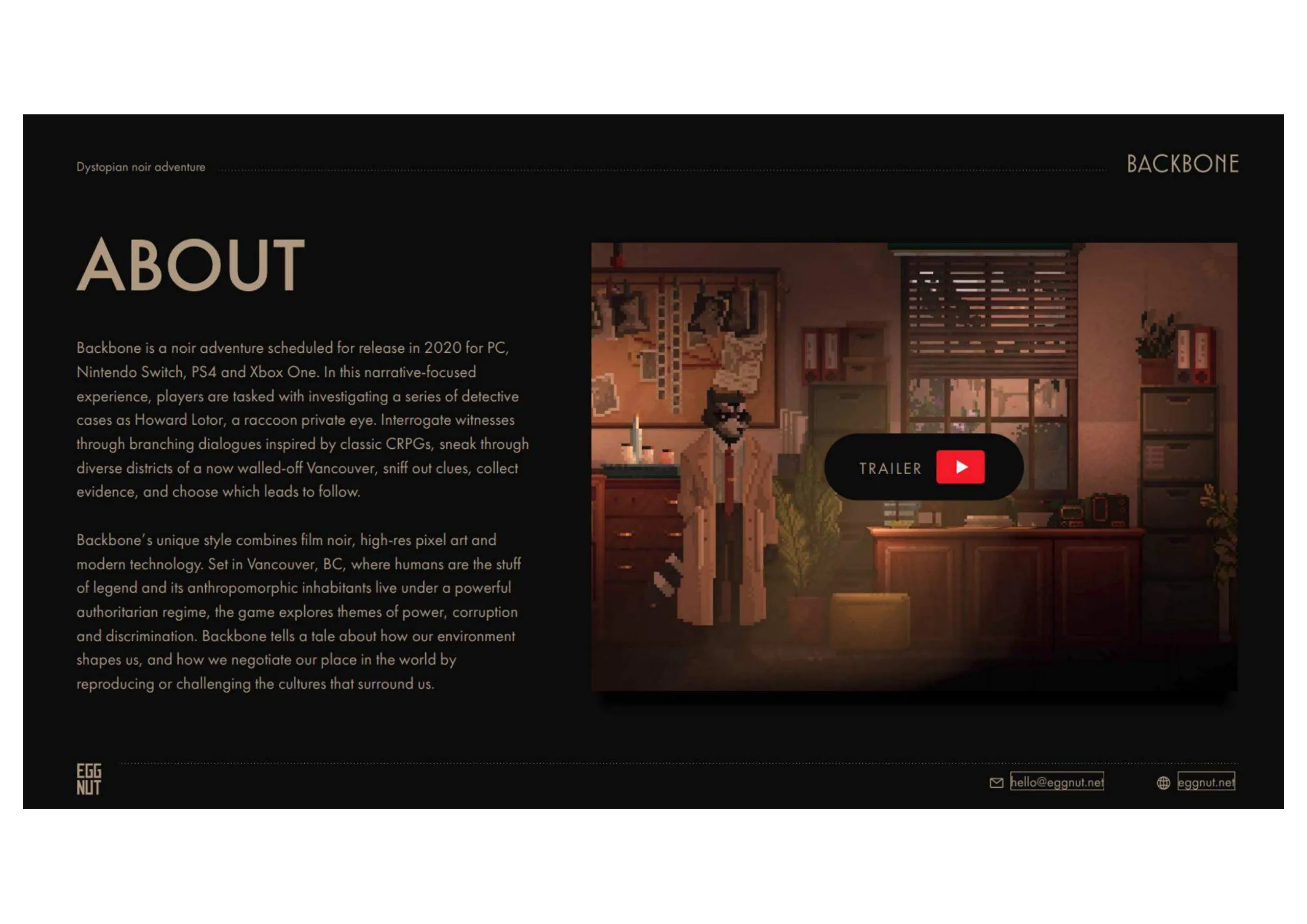
The Backbone pitch deck, used by game studio Egg Nut in 2019, was instrumental in securing a publishing deal with Raw Fury for their noir role-playing indie video game, “Backbone.”
Set in a dystopian Vancouver inhabited by animals, the game allows players to explore a deeply personal story through the eyes of raccoon private eye Howard Lotor.
Scroll to preview
What makes this game pitch deck great:
- Clear marketing strategy: The deck outlines a detailed marketing plan supported by market research and data.
- Development timeline: It presents a clear timeline for the game’s development process.
- Team slide: It highlights the expertise and background of the development team.
Diablo game pitch deck (static PDF)
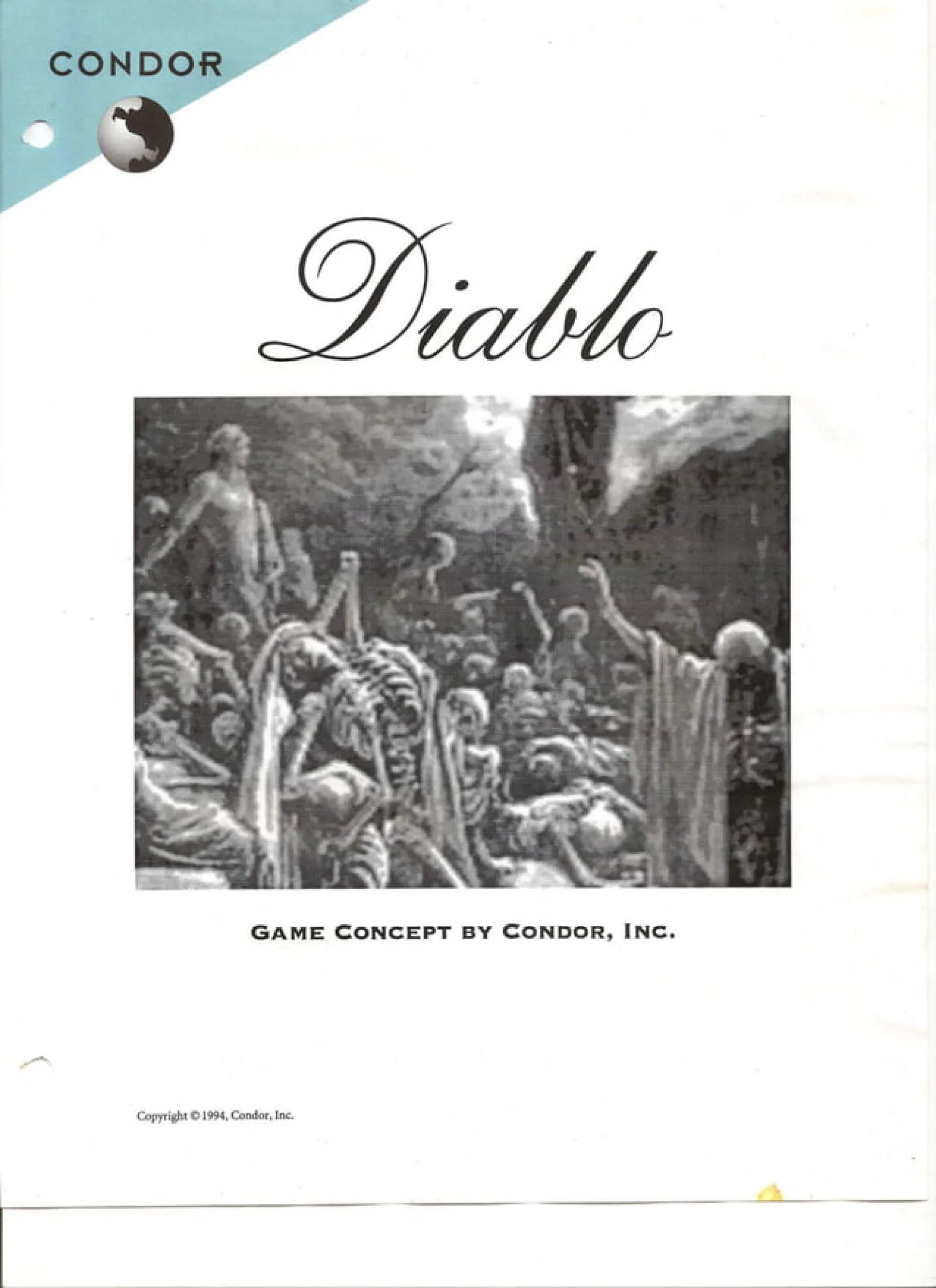
The Diablo pitch deck, created in 1994 by Blizzard North (formerly Condor), was a key element in securing the publishing deal for the first installment of the Diablo video game series.
This comprehensive proposal played a crucial role in the development and release of the game, which became a landmark in the action role-playing game genre.
Scroll to preview
What makes this game pitch deck great:
- Comprehensive gameplay explanation: The deck outlines the gameplay mechanics, offering insights into the action role-playing elements that define Diablo.
- Marketing strategy slide: It includes a dedicated slide for the marketing strategy, detailing how the game will be promoted and positioned in the market.
- Detailed development schedule: The deck presents a thorough development timeline, showing the planned stages of game creation and milestones.
One Lonely Outpost game pitch deck (static PDF)
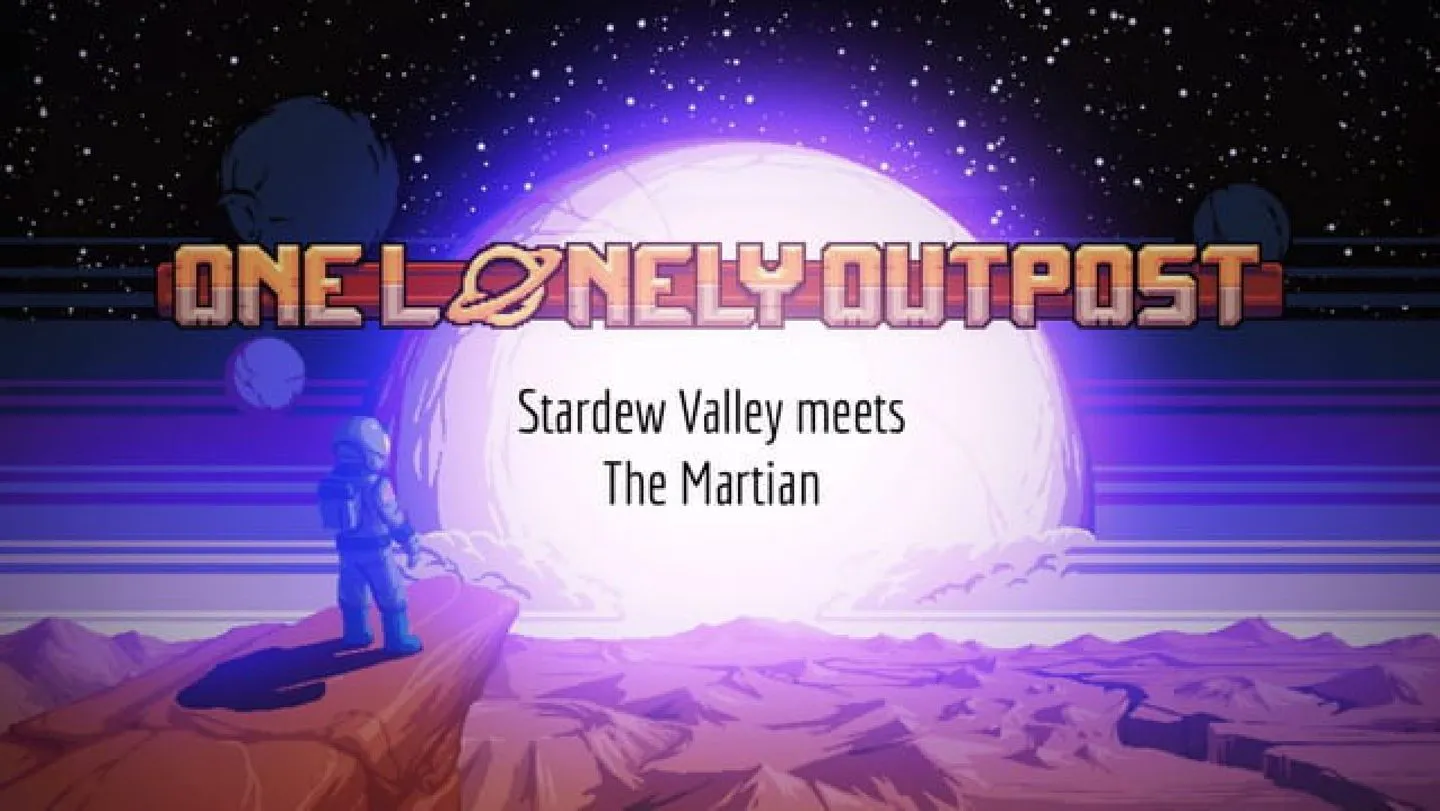
The “One Lonely Outpost” pitch deck was used by Aurorian Studios to secure an equity investment and a publishing deal for their unique farming simulation game set on a barren alien planet.
The game offers players a choice between traditional farming and futuristic approaches like robo-cows and gene-spliced crops.
Scroll to preview
What makes this game pitch deck great:
- Detailed development schedule: It includes a strict three-month development cycle with a one-week margin of error, showcasing the team’s commitment to timely delivery.
- Concept art and screenshots: The deck features concept art and screenshots to give investors a visual understanding of the game’s aesthetic and gameplay.
- Technical details: The deck provides insights into the technical aspects of the game, including its development tools and platform compatibility.
Bear & Breakfast game pitch deck (static PDF)
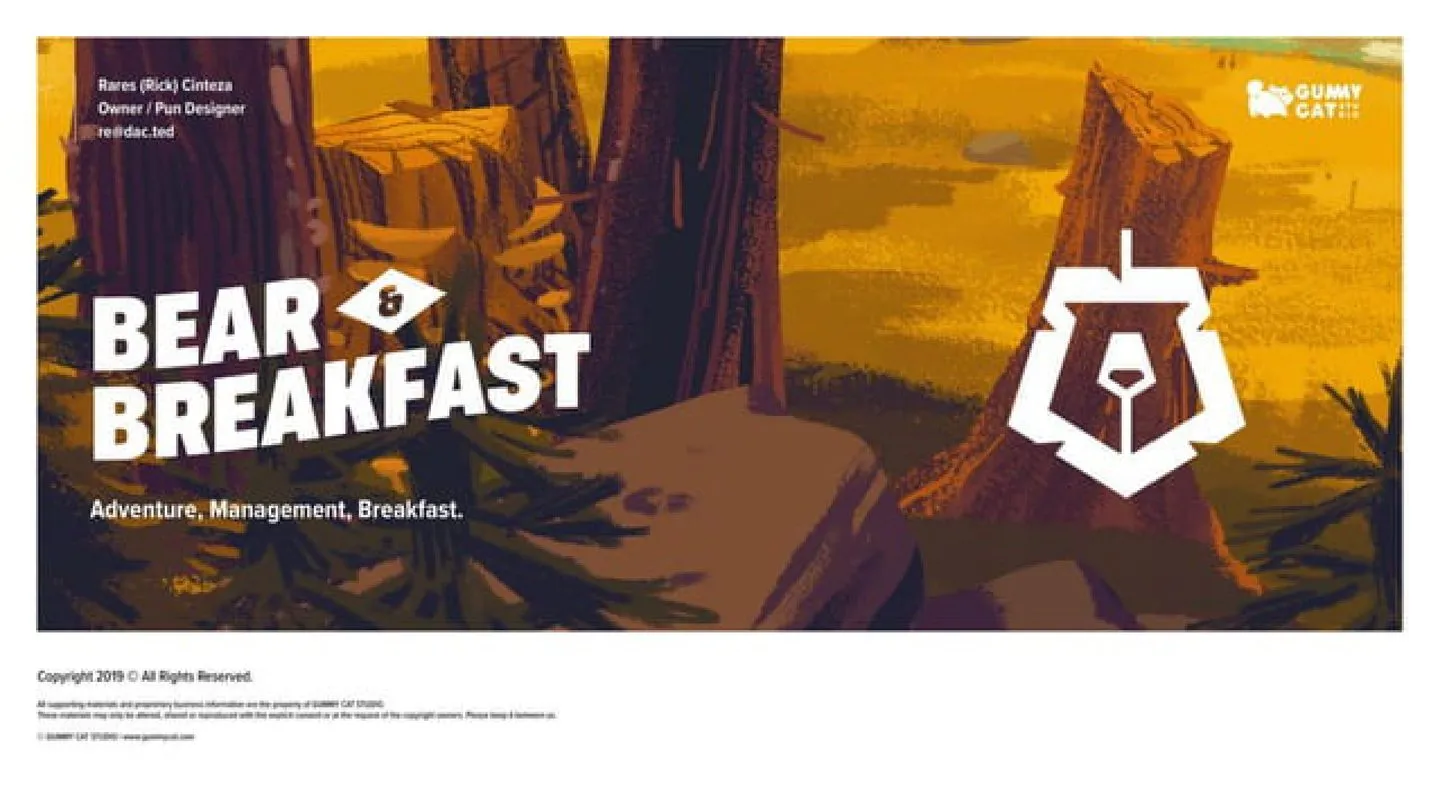
The “Bear & Breakfast” pitch deck was instrumental in securing a publishing deal for the game developed by Bucharest-based studio Gummy Cat.
Released in 2022, “Bear & Breakfast” is a management sim video game where players control Hank, a bear who operates a bed and breakfast, aiming to maximize guest satisfaction.
Scroll to preview
What makes this game pitch deck great:
- Game concept explanation: The deck includes screenshots that effectively explain the game’s unique concept and mechanics.
- Game-style roadmap: It features a creative roadmap with a “you are here” marker, providing a clear visual representation of the game’s development progress and future plans.
- Clear budget breakdown: The deck presents a detailed breakdown of the budget, outlining how funds are allocated and used.
The Flame in the Flood game pitch deck (static PDF)
The Flame in the Flood’s pitch deck expertly introduces a survival adventure game with a unique artistic and thematic approach. It’s designed to effectively communicate the game’s core mechanics and immersive world.

Scroll to preview
What makes this game pitch deck great:
- Distinctive theme: The deck captures the essence of the game’s post-apocalyptic setting, drawing in the audience with its unique and compelling theme.
- Survival mechanics highlight: It emphasizes the survival aspects of the game, detailing the challenging and strategic gameplay that appeals to fans of the genre.
- Artistic presentation: The deck showcases the game’s distinctive art style, which is both visually appealing and thematically appropriate, enhancing the overall narrative.
Turbo Boom game pitch deck (static PDF)
Turbo Boom’s pitch deck effectively introduces a high-speed racing game with detailed insights into its development, budget, and marketing strategies.

Scroll to preview
What makes this game pitch deck great:
- Detailed budget breakdown: The deck provides a comprehensive overview of the game’s budget, offering transparency and insight into production costs.
- Marketing strategies: It outlines specific marketing strategies and plans for audience engagement, demonstrating a well-thought-out approach to market penetration.
- In-game screenshots: It includes captivating screenshots from the game, providing a visual taste of the racing experience and the game’s graphics quality.
Beacon Pines game pitch deck (static PDF)
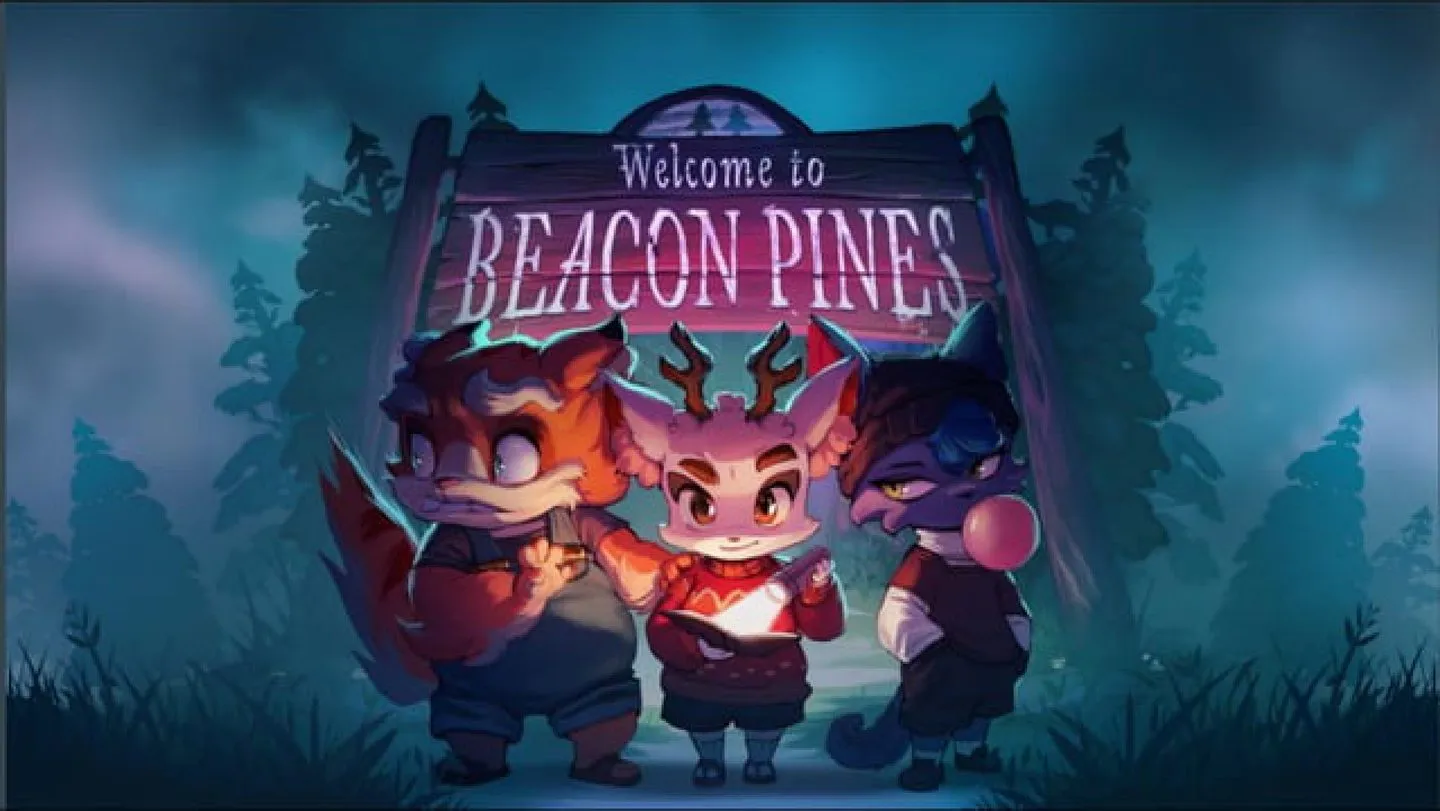
Beacon Pines’ pitch deck presents an enchanting adventure game with a focus on storytelling and art style. The deck is designed to capture the game’s whimsical essence and narrative depth.
Scroll to preview
What makes this game pitch deck great:
- Captivating story: The deck emphasizes a rich, branching narrative that reacts to player choices.
- Charming artwork: It showcases the game’s beautiful and unique art style.
- Platforms and team information: It includes details about the platforms on which the game will be available, broadening its potential reach. It also provides insights into the talented team behind the game, highlighting their skills and experience in the industry.
How to create a winning game pitch deck?
A well-crafted pitch deck highlights your game’s strengths and demonstrates your understanding of the market and your ability to deliver a successful product.
Here’s how to do it.
11 steps to create a successful game pitch deck:
1) Clearly define what sets you apart
Before you start, deeply understand your game’s unique aspects. Identify the genre, core mechanics, and what sets your game apart. Is it an innovative gameplay feature, a captivating story, or groundbreaking visuals?
2) Decide on a target audience
Defining your audience for a game pitch deck involves identifying the specific group of gamers most likely to be interested in your game, based on factors like age, gaming preferences, and platform choice.
Understanding your audience ensures your game meets their expectations and needs, making it more appealing to investors or publishers and increasing your likelihood of success.
3) Get your game mechanics straight
To get gamers and publishers excited you’ll have to show some skin. Or in this case, your game mechanics. what rules and systems will guide player interactions and game progression?
Nailing these down is crucial for investors and players because they shape the player’s experience and determine their long-term engagement.
Knowing your game mechanics shows that you’ve put yourself in your proverbial audience’s gaming chair and that you know how you’re going to keep them sitting in it (playing your game) for a long time to come.
As Oscar Clark, the CEO of Fundamentally Games, advises,
Also, knowing your game inside out and who will play it is crucial. Create player personas to tailor your pitch to their preferences, showing how your game meets their interests.
4) Showcase your game effectively
Use visuals like screenshots, concept art, and gameplay videos to bring your game to life in your pitch. These elements are crucial for capturing the interest of your audience.
Showcase the core gameplay mechanics and how players will interact with your game. If possible, include a short gameplay video or demo to strengthen your presentation.
5) Conduct thorough market research
In-depth market research is non-negotiable. Understand the current trends, identify where your game fits, and analyze your competitors. This step is about demonstrating not just your game’s potential but also your understanding of the market.
6) Present clear financial projections
Transparency in financial projections is key. Clearly outline your budget, funding needs, and how the investment will be utilized.
This level of detail shows that you’re not just a visionary but also a pragmatic planner who understands the business side of game development.
For more information, check out our guide on how to create a financial slide for your pitch deck.
7) Make sure your team looks as good as your game
Your team is the backbone of your project. Highlight their skills, experience, and past successes. Show why your team is the right group of people to bring this game to life.
As James Brooksby, CEO of Absolutely Games, suggests,
Here’s a guide on how to create the perfect team slide for your pitch deck.
8) Outline your marketing plans
Describe your strategy for promoting your game. Include plans for building player engagement, community, and how you’ll reach your target audience.
A well-defined marketing plan demonstrates your commitment to not just creating a game but also ensuring its success in the market.
9) Clearly state your needs
Be specific about what you need from your audience. Whether it’s funding, marketing support, or distribution channels, make your requirements clear.
This clarity shows that you have a well-thought-out plan for your game’s journey from development to market.
10) Customize your deck for each publisher
Each publisher or investor is different. Tailor your pitch to align with their interests, portfolio, and business strategy. This customization shows that you’ve done your homework and are serious about forming a partnership.
11) End with a clear next step
Conclude your pitch with a clear call to action. What are the next steps you propose?
Whether it’s a follow-up meeting, a prototype demonstration, or a discussion about funding, ending with a clear next step keeps the momentum going and shows your eagerness to move forward.
Here’s an example of a game pitch deck with a clear next step:
Mistakes to avoid when creating a game pitch deck
Navigating the path from a game idea to a funded project is filled with potential missteps. Thankfully, we’ve got some tips from an industry veteran, Brian Upton, to guide you.
His journey began at RedStorm Entertainment, contributing to classics like Rainbow Six and Ghost Recon, and continued for 14 years as a senior game designer at Sony Santa Monica.
With a career spanning two decades, he’s been on the receiving end of numerous game pitches, which makes him the perfect mentor to navigate the do’s and don’ts of game pitch decks.
7 key mistakes to avoid:
- Overloading with backstory: Avoid starting your pitch with an extensive backstory of the game world. Remember, the pitch is about selling the concept, not delving deep into lore.
- Lacking a clear vision: Don’t ask the listener what they want to see; instead, present a clear, confident vision of the game you are passionate about creating.
- Neglecting player experience description: Ensure you clearly articulate what the player will actually do in the game. Describe the gameplay experience in detail.
- Ineffective prototypes: Your prototype should highlight unique aspects of your game, not just basic functionalities. Make sure it showcases the game’s hook and demonstrates your ability to overcome challenges.
- Poor quality artwork: Quality over quantity. One or two outstanding art pieces are better than multiple mediocre ones. Also, distinguish clearly between placeholder and final art.
- Undefined scope and resources: Know your game’s scope and have a clear idea of the budget, timeline, and team size needed. An undefined scope can make your project seem unfeasible.
- Unrealistic business plans: Base your business plan on realistic projections, not outlier successes. Aim for a balanced approach that aligns with your game’s scope and market potential.
If you’d like to learn more, you can check out the full video of Brian’s speech below:

How to design a game pitch deck?
Your deck’s design can significantly influence how your game is perceived and can be the difference between capturing attention or being overlooked. Here are some pitch deck design ideas to help you create a presentation as captivating as your game.
8 game pitch deck design tips:
1) Embrace scrollytelling
Scrollytelling, or narrative scrolling, is a dynamic way to present your game’s story. As viewers scroll through your deck, each slide can reveal a new chapter of your game’s journey.
This method keeps the audience engaged and makes your presentation more memorable. Think of it as guiding your audience through an interactive journey, much like a level in a game.
Here’s an example of scrollytelling in action:
2) Incorporate interactivity and multimedia
A pitch deck should be more than static slides. Incorporate interactive elements like clickable demos, embedded gameplay videos, or even mini-games.
This interactivity not only showcases your game’s features but also keeps the audience engaged. Multimedia elements like sound clips, animations, and videos can bring your game’s world to life right within the deck.
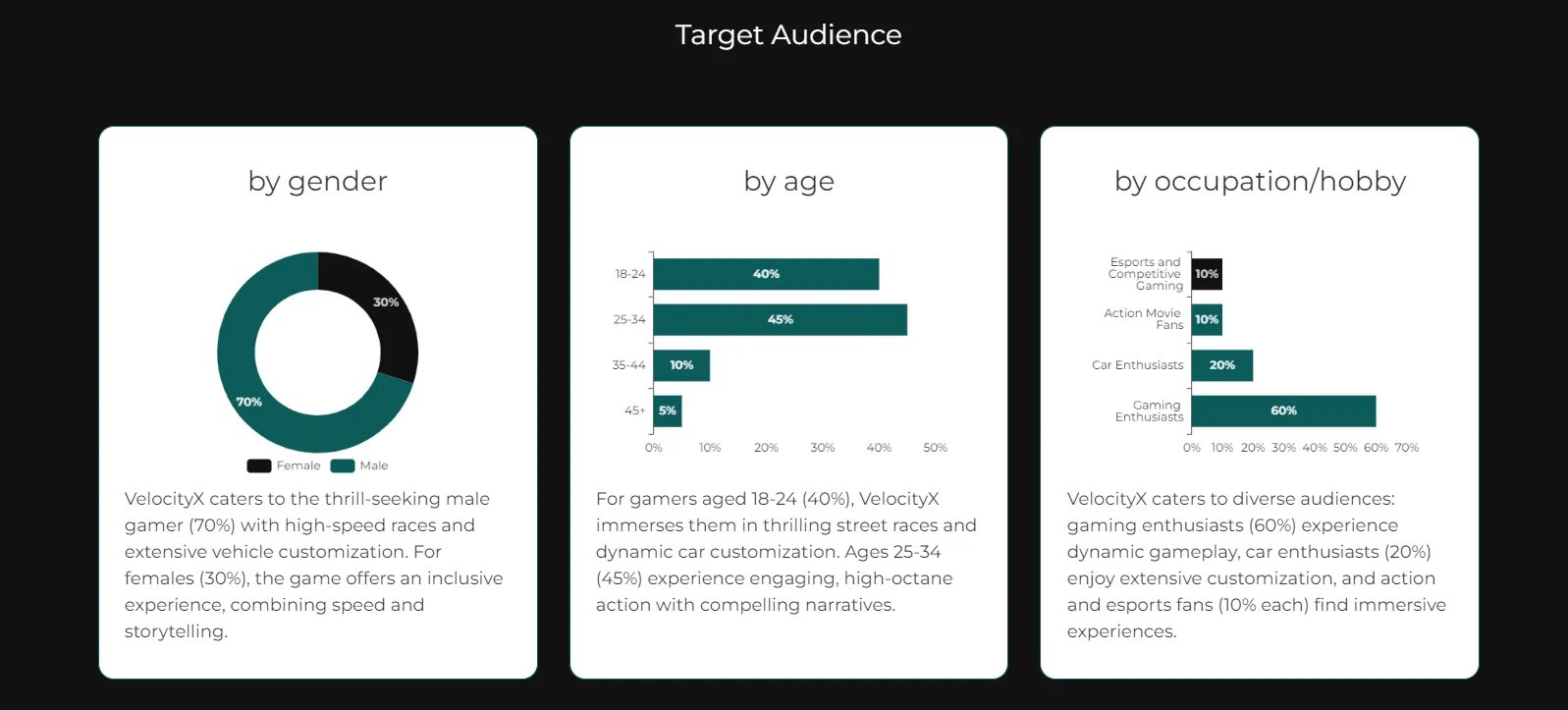
3) Use data visualization
Data visualization is a powerful tool to present market research, player demographics, and financial projections.
Complex data can be transformed into easy-to-understand graphs, charts, and infographics. This not only makes your deck more visually appealing but also ensures that your data is easily digestible and memorable.
Here’s a great example of data visualization:
4) Personalize your deck
Personalization can make a significant impact. Interactive pitch deck software allows you to connect to your CRM and use dynamic variables to personalize the deck with the viewer’s name or company name.
This tailored approach shows attention to detail and can create a more meaningful connection with your audience.
If you want to find the best tool for your needs, I prepared a handy list of the best pitch deck software currently available.
5) Use cohesive branding
Tailor your pitch deck to reflect your game’s style and personality. Use colors, fonts, and imagery that align with your game’s aesthetic.
This type of personalization creates a cohesive visual experience and helps your audience immerse themselves in your game’s world from the first slide.
6) Ensure mobile-responsive design
In today’s world, it’s crucial to ensure your pitch deck is mobile-responsive.
Your audience might view your deck on various devices, so it should look great and function well on everything from a smartphone to a large monitor. A mobile-responsive design ensures accessibility and convenience for your viewers.
Here’s an example of a mobile-responsive deck:
7) Highlight key information
Design your pitch deck to focus the viewer’s attention on the most important information.
Techniques like graying out content help guide the reader’s focus to the most critical elements at a time, ensuring that key points are effectively communicated without overwhelming the audience.
8) Segment content in tabs
Organize your content in tabs to cater to different aspects of your game and audience. This approach allows viewers to easily navigate through your deck and focus on the sections most relevant to them.
Segmenting content in tabs also helps in structuring your presentation logically, making it more user-friendly and effective.
Here’s an example of a deck with segmented content:
Game pitch deck templates
Starting your game pitch deck can be challenging, especially when you’re trying to encapsulate the spirit of your game into a presentation.
Interactive game pitch deck templates are here to ease this process. They offer a structured approach, filled with interactive and multimedia elements, crucial for showcasing your game dynamically.
These templates not only save you valuable time but also ensure your pitch deck reflects a professional and engaging narrative.
Grab one!